


Duct Humidity and Temperature Transmitter HMD60
For high precision measurements in demanding HVAC applications
Technical note
Power usage in data centers represents a share of global electricity consumption that is steadily growing. A recent figure for the US puts data center electricity use at 1.8% of the national total. A large proportion of that energy use – over and above what the computer equipment is using – comes from cooling. Another environmental consideration is clean water used for evaporative cooling. Many schemes aim to reduce data center power usage efficiency (PUE) towards an ideal ratio of one, including some using artificial intelligence.
One of the most important requirements to reduce cooling costs is to measure conditions properly in the first place. The first things to consider are:
There are a few types of humidity and temperature transmitters that are typically used in data centers: outdoor humidity sensors, duct humidity sensors, and wall or space humidity sensors.
Outdoor humidity and temperature sensors are used with airside economizers and cooling towers. The most advanced economizer control paradigm is to use the differential enthalpy (heat content). You measure the enthalpy of the outside air and then use the return air to control when to recondition the hot return air and when to use the outside air.
Outdoor humidity sensors with wet-bulb temperature output indicate directly when evaporative coolers can be used. The wetbulb temperature indicates the temperature that can be reached with evaporative cooling; if the outdoor humidity is too high the rate of evaporation is low and the cooling effect too low.
One of the most important parts of an outdoor humidity and temperature sensor is the solar radiation shield, which reduces the influence of heat from the sun on the measurement. Seemingly small design changes can easily cause 1–2 °C extra heating in unfavorable conditions.
Outdoor sensors are also subjected to everything Mother Nature might throw at them, including icy rain and heavy winds. A data center runs 24/7/365, so failure is not an option!
A suitable outdoor humidity sensor will have a good solar radiation shield. Observe the black lower surfaces of the plates, which are essential to keep the sensor cool.
Duct humidity and temperature sensors are used on duct and air-handling units to measure and control the condition of incoming air and measure the return air from the data center. They are used to complement outdoor humidity sensors so that the enthalpy difference between the return air and the outside air can be calculated. Some of the duct sensors may be subjected to harsh conditions if installed inside humidifiers or inlet air ducts.
When you install the devices, consider how you will make regular checks. It is often easy to add a port for a reference probe during installation. In this way, you can easily introduce a reference probe to the duct and compare the reading to the duct sensor.
Wall or space sensors measure the actual conditions inside the data center. Humidity conditions are usually benign; however, the rate of change can be fast in response to load level fluctuations and when switching between reconditioned air and free cooling. As the airflow around these sensors is typically slower than for duct sensors, the response time to temperature changes is slower. There might also be outgassing from cables and other equipment running at ever-higher design temperatures, which may cause drift in some humidity sensors. With rapid temperature fluctuations it might be a better choice to use dew point temperature as a humidity control parameter as it doesn’t depend on the temperature of the sensor.
You also need to consider what conditions you are measuring and using for control purposes, as the temperature and humidity will be dramatically different before and after the heat load (cold or warm aisles). You can get high-quality instruments that measure conditions with high accuracy – devices with 0.1°C and 1%RH accuracy are readily available, but moving the sensor slightly can cause much larger changes.
Even small measurement errors can cause significant increases in your energy bill, so it pays to get quality instruments and maintain the measurements in a good condition. Careful consideration of the installation location also pays off.
Are you interested to learn more about optimizing the conditions while staying cost efficient? Read next our expert article on how can you improve your data center’s energy efficiency and reliability.
For high precision measurements in demanding HVAC applications
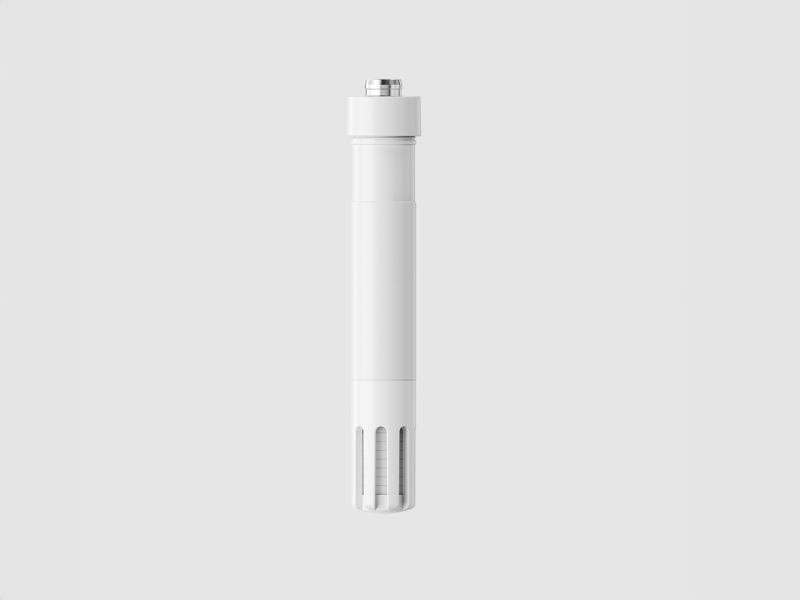
The Vaisala HUMICAP® Humidity and Temperature Probe HMP113 is a highly accurate and cost-effective humidity probe with a plastic enclosure. It has…
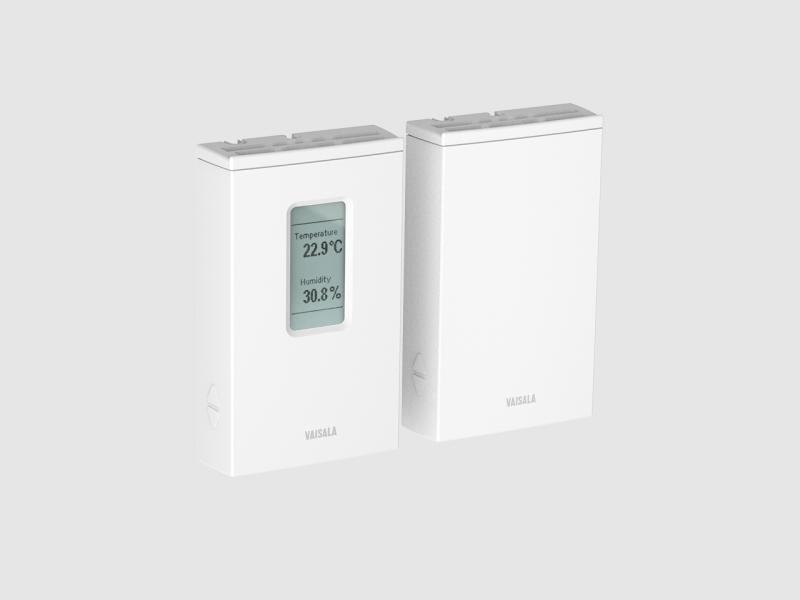
±1.7%RH wall transmitters with a certificate for demanding HVAC
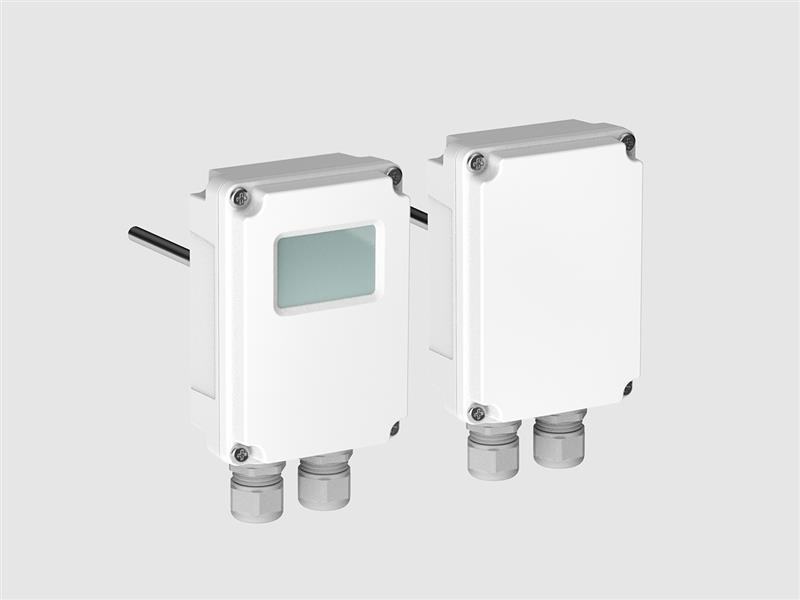
For high precision measurements in HVAC applications

for quick inspections and spot-checking
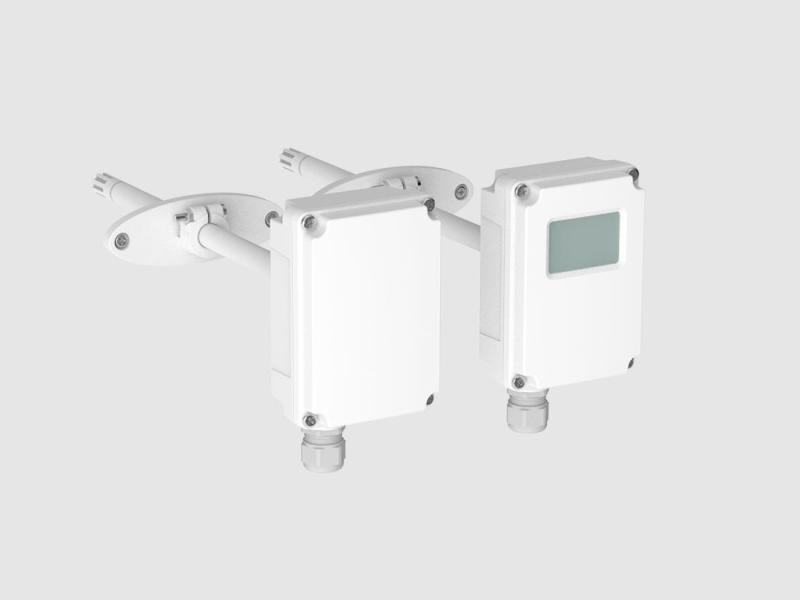
For high-precision measurements in HVAC applications

What relative humidity, dew point, absolute humidity and mixing ratio are, how temperature and pressure distort the reading, and why dew point is…

How humidity behaves in real conditions, the three most common measurement problems, and two practical scenarios —heated air and compressed air—…

When to measure relative humidity vs. dew point, what high and low humidity demand, how temperature and pressure factor in, and when a warmed probe…

Cooling accounts for up to 40% of a data center's energy demand. This Vaisala guide explains how measurement accuracy cuts costs and risks, with a…
A specialist replies with the solution, the instrument and the service that fit.
Instruments to quote
No instruments yet. An enquiry can be sent anyway: a specialist answers.