


Indigo80 Handheld Indicator
The latest addition to the Indigo family of transmitters and probes, the Indigo80 is a compact, handheld indicator and data logger. Ideal for field…
Technical note
Controlling humidity in the rechargeable battery production process, such as lithium-ion, sodium-ion, and solid-state, is critical for safety, product quality, and energy efficiency. Manufacturers use large numbers of sensors throughout their processes to measure, monitor and control humidity levels. The cost of these sensors is negligible in comparison with the value of the assets and products that they protect. Nevertheless, it is vitally important that sensors are accurate and stable in the long-term, so regular calibration is essential.
Vaisala has built a global long-standing reputation for accurate, reliable humidity and dew point sensors, but these too require regular calibration to check that they are still performing correctly.
Sensors may deliver measurement results outside of acceptable limits for a number of reasons that may not be immediately apparent. The most important function of calibration is therefore to check measurements against a known standard.
All measurement devices drift over time to a greater or lesser degree, so ensuring these sensors are properly calibrated at appropriate intervals is essential if their readings are to stay reliable year after year.
The dew point sensors used in the midstream processes of battery production are sensitive and highly accurate instruments, but calibration is necessary for more than just the avoidance of drift. For example, the accuracy of sensors can be compromised by physical damage or other environmental factors.
When investing large amounts of capital in battery manufacturing facilities, it makes financial sense to also invest in high quality monitoring and control systems and services to ensure that production processes run safely and efficiently. Fast-response dew point sensors represent important components of such systems. By the same logic, it also makes financial sense to ensure these systems are reliable and accurate by calibrating them at regular intervals.
A key factor in choosing humidity and dew point sensors is proven reliability. The providers of sensors should be able to demonstrate long-term accuracy and stability over many years, and in a wide variety of changing environments.
When considering products that are new to the market, it is important to be aware that although they may have proved accurate and stable in a laboratory environment, they may not have been tested for years in challenging real-life field conditions.
The consequences of relying on measurements from inaccurate devices can be both dangerous and expensive, so calibration is particularly important in the battery sector. Air that is too moist can impact the quality of the final product, leading to poor performance and even product recalls. Moisture is also a safety risk due to the chemicals used in battery manufacture. These chemicals are moisture-sensitive and pose a risk of explosion if they come into contact with excess moisture before the battery cell is sealed during the manufacturing process.
Inaccurate measurements can also increase operating costs significantly. For example, excessive moisture removal can lead to over-drying, which would be costly because drying alone accounts for 30-40% of the total costs of battery manufacture.
Vaisala offers a range of calibration options. Easy-to-use handheld devices are available for quick and convenient spot-checking and on-site calibration, or devices can be sent to a Vaisala Service Center to be calibrated. Vaisala can also perform accredited calibrations if required.
With a hand-held calibration device, probes do not need to be removed from the process and downtime can be kept to a minimum. For example, using the Vaisala Indigo80, it is possible to spot-check individual sensors to determine when they need calibration, and even identify blind spots in the measurements. The Indigo80 can be used as a reference probe and sent to Vaisala for a factory calibration complete with a certificate for full calibration traceability.
One-off Vaisala calibrations can be quickly and easily ordered online through the Vaisala store. For extra peace of mind, customers may obtain a Calibration Care Agreement, which includes planned calibrations for multiple years and is the most economical and convenient way to maintain the accuracy of Vaisala measurement instruments in the long term.
In summary, sensor calibration is a simple, effective process to check that monitoring and control systems are operating correctly. Effective calibration procedures demonstrate to all stakeholders that a plant is being managed properly to protect safety, energy efficiency and battery product quality.

Equip your dry room, glove box operations, and NMP solvent concentration monitoring with products that are designed to be operated in the most demanding environments.
The latest addition to the Indigo family of transmitters and probes, the Indigo80 is a compact, handheld indicator and data logger. Ideal for field…

for OEM applications
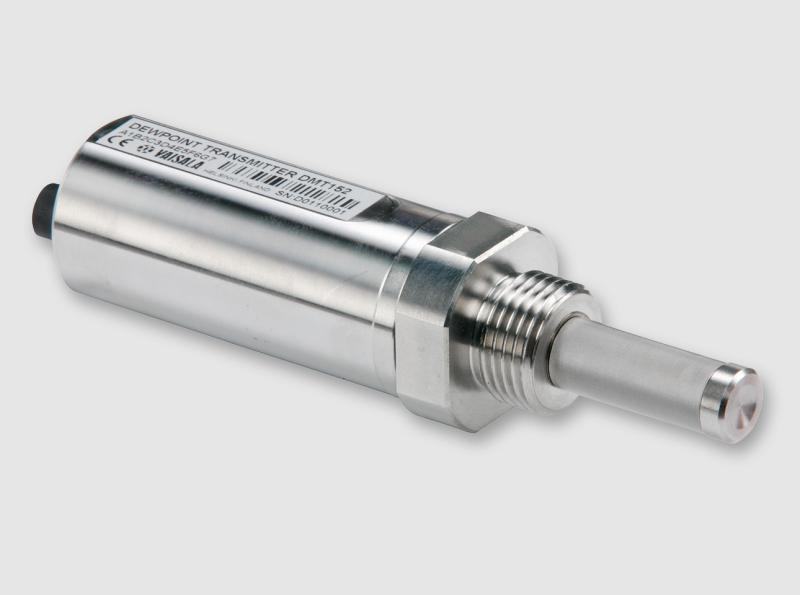
Please note that the DMT152 is being discontinued and should not be specified for new projects. Get to know the new DMT153 here.
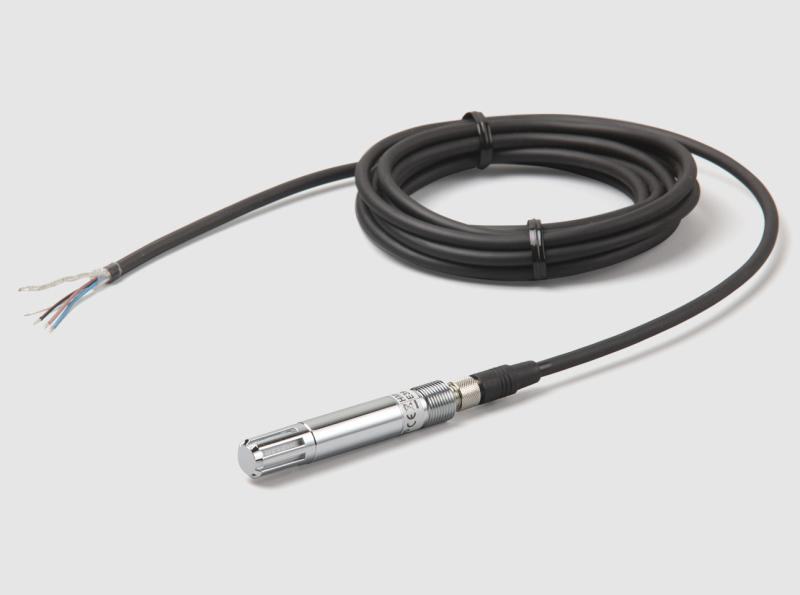
with ±1.5%RH accuracy for demanding volume applications
with ±1.5%RH accuracy for demanding volume applications
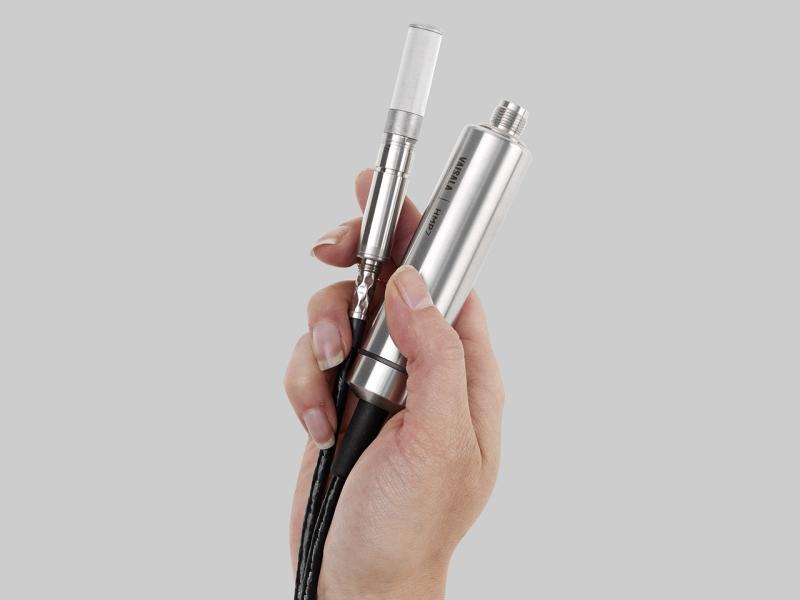
for high humidities

What relative humidity, dew point, absolute humidity and mixing ratio are, how temperature and pressure distort the reading, and why dew point is…

How humidity behaves in real conditions, the three most common measurement problems, and two practical scenarios —heated air and compressed air—…

When to measure relative humidity vs. dew point, what high and low humidity demand, how temperature and pressure factor in, and when a warmed probe…

Cooling accounts for up to 40% of a data center's energy demand. This Vaisala guide explains how measurement accuracy cuts costs and risks, with a…
A specialist replies with the solution, the instrument and the service that fit.
Instruments to quote
No instruments yet. An enquiry can be sent anyway: a specialist answers.