


Dew Point Meter DMT132
for refrigerant dryers
Technical note
The amount of moisture in air plays a critical role when drying everything from wood to ceramics and food, and even compressed air. A lack of accurate temperature and humidity measurement in industrial processes can lead to a variety of problems, and therefore additional costs, that a business could do without. Whether it’s wasted energy from over drying, poor end-product quality, or even dryer corrosion that shortens the lifespan of your equipment, with the right measurement equipment in place you can avoid all these disruptive and potentially costly problems.
Regardless of the application, there are three key areas that need to be monitored in your drying process: input temperature, input air, and exhaust air. Accurate and reliable measurement of parameters such as humidity, temperature, and dew point is critical across a range of different industrial drying processes.
• Wood drying is a complex process where the results are affected by the type of wood being dried as well as seasonal variations. Here, humidity really matters because it directly affects the quality of the drying process. Accurate relative humidity or dry-bulb/wet-bulb measurement ensures that the wood does not crack due to overly dry conditions or take longer than needed to dry due to overly moist conditions. In both cases, when you have a clear picture of humidity levels, you can maximize the energy efficiency of the drying process and the quality of the end product.
• Compressed air is used in many different industrial processes to operate equipment like robotic assembly systems. This kind of complex equipment contains components that could easily malfunction or corrode if exposed to excessive condensation. Ensuring that the compressed air fed to the equipment is clean and dry is therefore extremely important, and this is where stable and accurate dew point monitoring comes in. Accurate dew point measurement is also required for compliance with most medical gas and breathing air regulations.
• For food-drying, nutraceuticals or powder drying applications, the humidity level in dryers and ovens has to be carefully controlled in order to keep quality and yield high and to ensure that the end product has the desired characteristics. Proper drying also helps to ensure safety by preventing microbial growth. Here, accurate humidity measurement helps to achieve exactly the right balance – drying the product sufficiently to keep it safe while optimizing input volume and drying time in order to minimize energy usage and maintain quality.
• When drying ceramics or bricks, proper temperature and humidity control in the drying process helps to minimize cracking and avoid over drying, which leads to wasted energy and may even present a fire risk. As clays naturally contain a high level of water, uneven drying due to poor humidity control leads to internal stresses that can ultimately lead to a crack or breakage. In these applications saving energy really pays off because the drying process alone can account for a quarter of all energy consumed in the production process.
But a measuring device is only as good as its sensor. Poor quality sensors not only fail more often, they can also suffer from drift that leads to inaccurate measurements – even in mildly corrosive environments.
Vaisala’s range of humidity, temperature, and dewpoint measurement sensors are built to withstand the tough conditions typical of industrial drying processes – meaning they are highly accurate, robust, and easy to calibrate.
Learn how Vaisala can help improve the efficiency and results of your drying processes.
for refrigerant dryers

for OEM applications

The latest addition to the Indigo family of transmitters and probes, the Indigo80 is a compact, handheld indicator and data logger. Ideal for field…
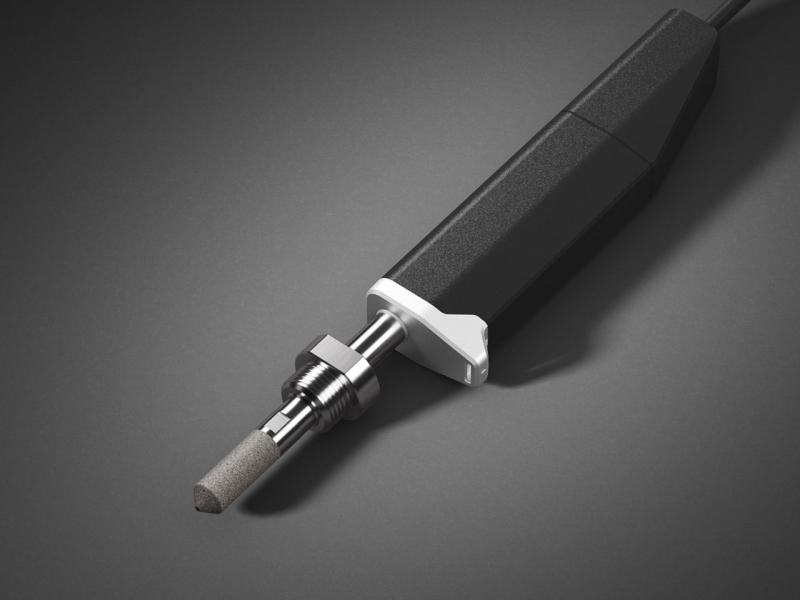
For spot-checking and calibrating dew point measurements

for quick inspections and spot-checking

For high precision measurements in demanding HVAC applications

What relative humidity, dew point, absolute humidity and mixing ratio are, how temperature and pressure distort the reading, and why dew point is…

How humidity behaves in real conditions, the three most common measurement problems, and two practical scenarios —heated air and compressed air—…

When to measure relative humidity vs. dew point, what high and low humidity demand, how temperature and pressure factor in, and when a warmed probe…

Cooling accounts for up to 40% of a data center's energy demand. This Vaisala guide explains how measurement accuracy cuts costs and risks, with a…
A specialist replies with the solution, the instrument and the service that fit.
Instruments to quote
No instruments yet. An enquiry can be sent anyway: a specialist answers.