


Dew Point Meter DMT132
for refrigerant dryers
Technical note
In the food, beverage and pharmaceutical industries, ensuring cleanliness in production facilities is non-negotiable. But do you also take into account your compressed air processes? Microorganisms like bacteria, yeast, and fungi can grow inside air compressors – negatively affecting the quality and safety of your final products. In this article, we’ll look at what kinds of environments encourage microorganisms to grow and what you can do to control them.
1) What kind of conditions encourage microbial growth?
Microorganisms need three factors to grow: nutrients, the right temperature, and moisture. All of these factors can exist in compressors:
The oil in compressors can provide the nutrients needed for microorganisms to thrive. When it comes to temperature, bacteria and fungi grow best between 25 and 40 degrees Celsius – though thermophilic microorganisms prefer higher temperatures between 45 and 90 degrees Celsius. Although temperatures in a compressor can reach much higher than this, the compressor isn’t hot enough for long enough to sterilize it. For that reason, controlling moisture becomes key. Water can present itself in three different forms: solid (ice), liquid (water), and gas (vapor). Humidity is the amount of water vapor in the atmosphere or in a gas, and it can be measured and defined in different ways. For example, relative humidity is a measure of how much water vapor there is as a percentage of the maximum for that temperature. As the air or gas is cooled it can hold less vapor. The dew point is the temperature below which the vapor would start to condense back into a liquid. Humidity levels above 50% can encourage microbial growth.
Since spores from bacteria and fungi can be introduced from the environment and resist both high temperatures and dry environments, filtration and testing for contaminants in compressed air systems is extremely important.
2) What standards exist for testing compressed air?
The most recent ISO standard for measuring microbial growth in compressed air is ISO 8573-7:2003, Compressed air – Part 7: Test method for viable microbiological contaminant content. ISO 8573-7 “specifies a test method for distinguishing viable, colony-forming, microbiological organisms (e.g. yeast, bacteria, endotoxins) from other solid particles which may be present in compressed air.” The standard covers nine areas, including contaminants and purity classes as well as the actual test methods for a wide range of variables including oil, gases, water, and humidity.
ISO 8573-7 requires the use of an impact air sampler capable of detecting colony-forming microbiological organisms to measure the quality of compressed air. Such machines are available from OEMs and are generally easy to integrate in production processes. However, ISO 8573-7 doesn’t specify how to avoid microbial growth in the first place. For that, it is necessary to ensure conditions are hostile to such growth.
3) How can measuring dew point help ensure end product quality?
As we’ve seen, dew point is the temperature below which water vapor becomes liquid water, causing condensation. Water can cause damage to compressed air systems, but most importantly it also creates an environment where microorganisms can thrive. Dew point measurement is essential to control humidity and inhibit the growth of microorganisms, helping to ensure that food, beverage and pharmaceutical products are safe for human consumption. If the humidity in a compressed air system is found to be too high, drying is needed to bring it back down to an acceptable level.
For food and beverage and pharmaceutical applications, Vaisala offers a wide range of dew point measurement devices suitable for compressed air applications. All Vaisala sensors withstand exposure to contaminants like water spikes, ambient humidity, compressor oil, and chemical impurities.
Vaisala’s DRYCAP® technology have been trusted for decades for their accuracy and stability. Vaisala’s dew point measurement products help you to optimize the moisture levels of your production process and prevent unwanted issues such as equipment corrosion or bacteria growth. This will help to ensure high-quality compressed air and first-class end products. In addition to this, Vaisala dew point measurement products have fast wet-to-dry and dry-to-wet response times – meaning you can spot changes in the condition of compressed air immediately and avoid wasting materials and production time. DRYCAP® technology also helps to optimize compressed air quality and ensure energy savings through continuous measurement stability.
Contact us to discuss how we can help ensure the quality of your compressed air applications. To download our latest compressed air eGuide and dew point instrument brochure, please visit our compressed air resource page.
for refrigerant dryers

for OEM applications

The latest addition to the Indigo family of transmitters and probes, the Indigo80 is a compact, handheld indicator and data logger. Ideal for field…
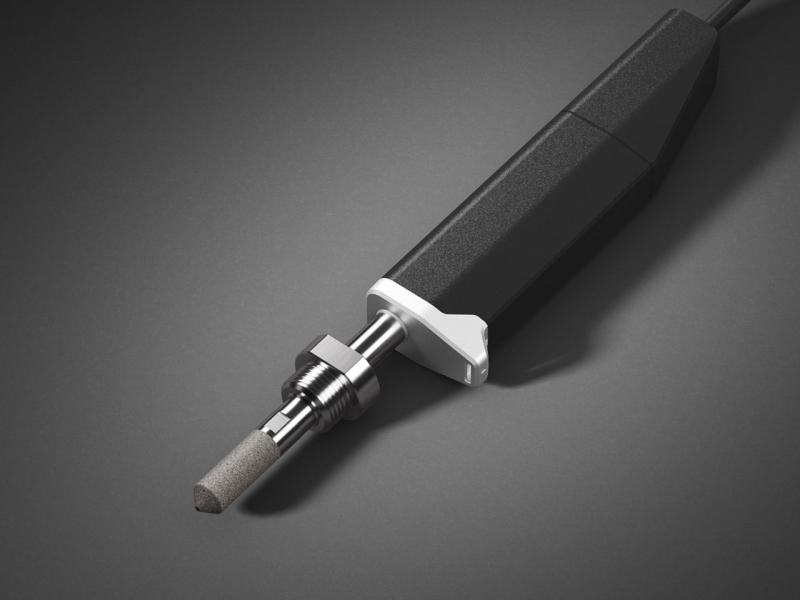
For spot-checking and calibrating dew point measurements

for quick inspections and spot-checking

For high precision measurements in demanding HVAC applications

What relative humidity, dew point, absolute humidity and mixing ratio are, how temperature and pressure distort the reading, and why dew point is…

How humidity behaves in real conditions, the three most common measurement problems, and two practical scenarios —heated air and compressed air—…

When to measure relative humidity vs. dew point, what high and low humidity demand, how temperature and pressure factor in, and when a warmed probe…

Cooling accounts for up to 40% of a data center's energy demand. This Vaisala guide explains how measurement accuracy cuts costs and risks, with a…
A specialist replies with the solution, the instrument and the service that fit.
Instruments to quote
No instruments yet. An enquiry can be sent anyway: a specialist answers.