


Miniature Dew Point Transmitters DMT143 & DMT143L (Long)
for OEM applications
Technical note
The cathode is an essential element in lithium rechargeable batteries. If it is not managed properly cathode drying can be one of the costliest processes in battery manufacturing. If you want to achieve a more sustainable, cost-efficient, and safe end product then it is essential to optimize the drying process.
In lithium-ion battery cell production, the key components are the anode, cathode, and electrolyte. The process begins with electrode (anode and cathode) fabrication. The electrode fabrication includes a drying step, in which a solvent is evaporated to create a dry, porous electrode – which is essential for the battery’s performance.
The process continues with a cutting step in which the electrodes are cut to the required shape. The anodes and cathodes are then arranged in stacks or rolls. These assemblies are encased in a container, filled with electrolyte, and the cathodes are linked to the positive terminal and anodes to the negative. Finally, the unit is sealed.
Cathode materials, and all dry room operations, are extremely sensitive to moisture. This means that the drying phase is crucial as even a tiny amount of residual moisture can impact the quality and efficiency of the final product.
Drying is carried out by feeding the electrode sheet into a drying machine, where temperatures can reach 160°C (320°F) or higher. There are multiple drying steps with varying temperatures and process conditions. The processing conditions end in ultra-dry and very hot environments with hazardous chemicals.
Inconsistencies in manufacturing electrode layers can have a significant negative impact on performance, leading to reduced overall battery capacity, or capacity degradation over time. Drying also influences the thickness and porosity of electrodes, which also affects the battery’s capacity.
Suitable measurement instruments installed at strategic positions along the production line can make the drying process as efficient as possible, saving energy and increasing yield. Additionally, the end product is safer and of a more consistent quality.
In these demanding conditions, dew point measurement probes are an excellent way to control the process. This is because dew point is not affected by temperature and directly measures the amount of moisture in the air. The measurement is consistent and reliable, which is a basic requirement for any process control setup.
Vaisala DRYCAP probes can be used at different points in the drying process, and while these points may have drastically different operating environments, the results of Vaisala’s probes will be accurate and comparable.
Vaisala’s technology is based on two innovations. The first is a capacitive thin-film polymer sensor, which absorbs or releases water vapor as the surrounding humidity increases or decreases. The dielectric properties of the polymer change as the humidity around the sensor changes, as does the capacitance of the sensor – which means the sensor can take accurate measurements even in low humidity. The measuring device also includes a temperature sensor, with dew point calculated from a combination of humidity and temperature readings.
The second important feature of DRYCAP is Vaisala’s auto-calibration function, which ensures accurate long-term measurement. During the automated auto-calibration procedure, the sensor is heated. The device then monitors humidity and temperature readings as the sensor cools off, with offset correction compensating for any potential drift. This means the DRYCAP sensor will deliver accurate measurements in the long run, reducing the need for regular maintenance.
Go to battery manufacturing page
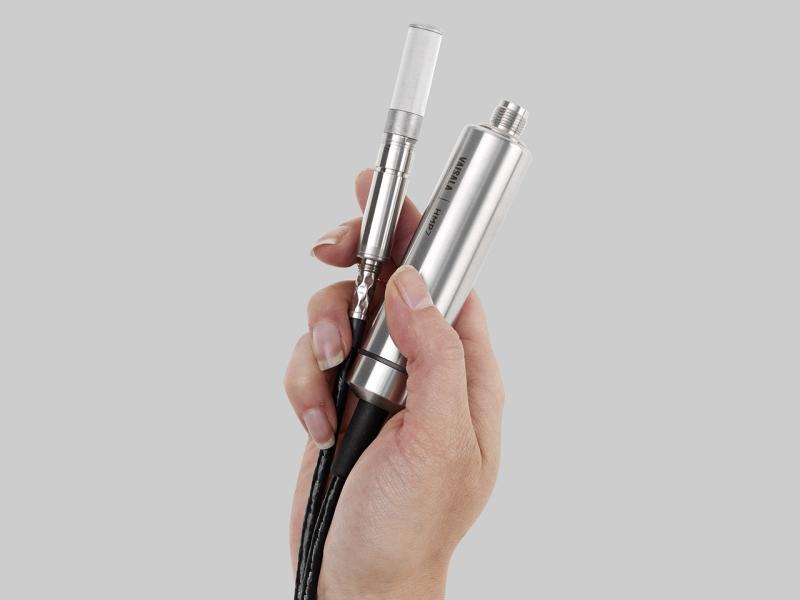
for OEM applications
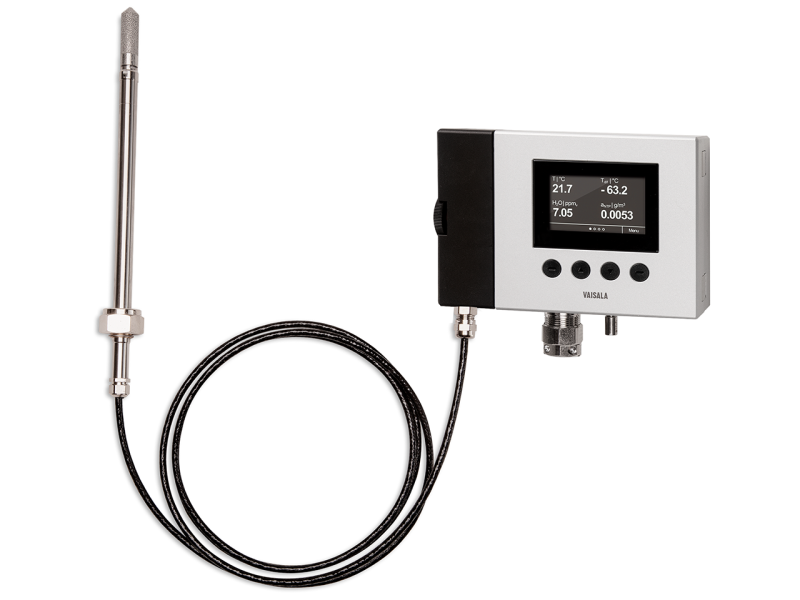
for high humidities
For use up to zone 0 and 20

The latest addition to the Indigo family of transmitters and probes, the Indigo80 is a compact, handheld indicator and data logger. Ideal for field…

for refrigerant dryers
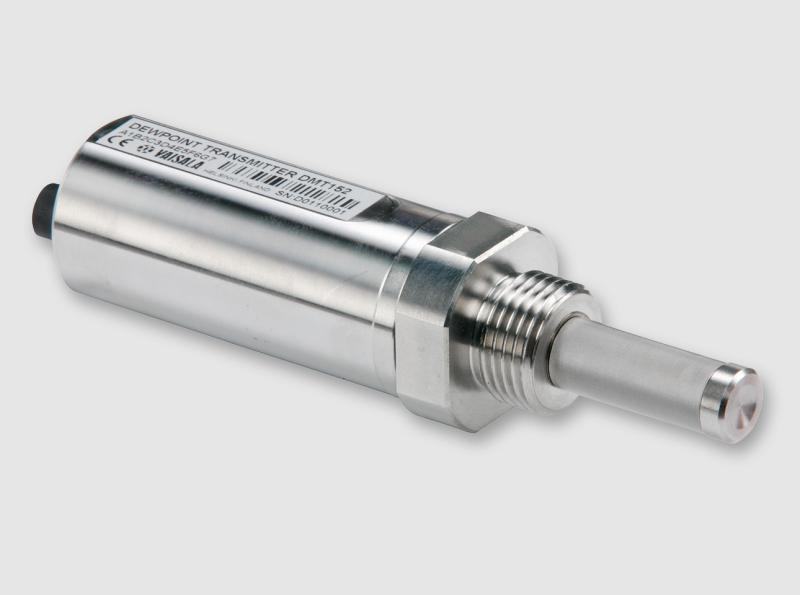
Please note that the DMT152 is being discontinued and should not be specified for new projects. Get to know the new DMT153 here.

What relative humidity, dew point, absolute humidity and mixing ratio are, how temperature and pressure distort the reading, and why dew point is…

How humidity behaves in real conditions, the three most common measurement problems, and two practical scenarios —heated air and compressed air—…

When to measure relative humidity vs. dew point, what high and low humidity demand, how temperature and pressure factor in, and when a warmed probe…

Cooling accounts for up to 40% of a data center's energy demand. This Vaisala guide explains how measurement accuracy cuts costs and risks, with a…
A specialist replies with the solution, the instrument and the service that fit.
Instruments to quote
No instruments yet. An enquiry can be sent anyway: a specialist answers.