


CAB100 Industrial Cabinet for continuous monitoring systems
for cleanrooms and industrial settings
Technical note
In the world of GMP validation, one question comes up time and again: should we be mapping CO₂ concentration in incubators, the same way we map temperature? We recently got this question in our webinar: CO2 Incubators: Precise Control & Reliable Monitoring
Why Temperature Mapping Is Different
Temperature mapping is a familiar requirement in GMP. We map air temperature as a proxy for product temperature. Since products don’t instantly equilibrate to changes in ambient air, mapping helps demonstrate uniformity and stability. Relative humidity also varies with temperature, making mapping important.
But CO₂ gas behaves differently.
The Physics of CO₂ Distribution
Unlike temperature and RH, gases equilibrate very quickly. CO₂ in a chamber will diffuse almost instantly, unless a probe is sitting directly in front of the gas inlet. Modern incubators often use fans to maintain temperature uniformity, which also accelerates CO₂ mixing.
I've been in GMP validation and environmental monitoring for over twenty years. Over that time, I've often explained CO₂ equilibrium with this analogy: it’s similar to water in a tank. You wouldn’t need to verify that the surface of the water is level; it’s inherently level due to gravity. In the same way, CO₂ concentration stabilizes throughout an incubator chamber within seconds due to the innate behavior of gases.
Some customers I work with have made an important point: although incubator manufacturers claim “fast diffusion” and “uniform CO₂ distribution,” in a GMP environment, vendor claims alone aren’t enough, even if they are true. Validation teams must show documented evidence that incubators are fit for their intended use.
The Buffer Effect
Even when doors are opened and CO₂ concentration drops from the typical 5% target toward ambient (~0.04%), the liquid media inside culture dishes and flasks act as a buffer. Dissolved CO₂ does not escape instantly. This buffering helps protect cell cultures during brief door openings, much like frozen products don’t immediately thaw in a freezer when the door is opened. In validation, this means recovery rate after door opening may be a more meaningful parameter than mapping CO₂ at multiple points in the chamber.
What Do Auditors Expect?
Here lies the challenge: there is no formal regulatory guidance requiring CO₂ mapping in incubators. USP, WHO, and ISPE provide guidance for temperature mapping, but none for CO₂.
That doesn’t mean auditors won’t ask questions. We know from experience that regulators may expect documented evidence that incubators are “in a state of control” and “fit for intended use.” However, mapping of CO₂ typically isn’t expected. Instead, our attention is better focused on demonstrating that the incubator works as intended, without relying solely on vendor design claims.
My perspective is rather pragmatic:
• Monitoring and controlling CO₂ is essential.
• Mapping is unlikely to reveal meaningful gradients.
• Evidence of CO₂ recovery and stability may be more persuasive than a mapping study.
Key Takeaways for Validation Teams
• CO₂ equilibrates quickly: Unlike temperature, mapping will not usually reveal gradients.
• Buffering protects cultures: Dissolved CO₂ in liquid media adds resilience during brief door openings.
• Focus on recovery rate: Validation should emphasize how quickly CO₂ levels return to setpoint after disturbance.
• Document control: Even without mapping, validation data should prove state of control and fitness for use.
• Be prepared for auditor questions: Claims must be backed by internal verification, not just manufacturer brochures.
Conclusion
CO₂ mapping in incubators may not be required or scientifically meaningful, but validation of CO₂ control absolutely is. By focusing on recovery rate, stability, and documented monitoring, validation teams can meet regulatory expectations while respecting the unique physics of CO₂ behavior.
I once offered this cheeky comment to a customer: “You can be the first to map CO₂—and prove it doesn’t do anything. Or maybe you unlock a whole new business for GxP.” Either way, the conversation is an important one for any lab working with cell culture incubators under GMP.
For more information, please contact us
for cleanrooms and industrial settings

for refrigerant dryers

for OEM applications
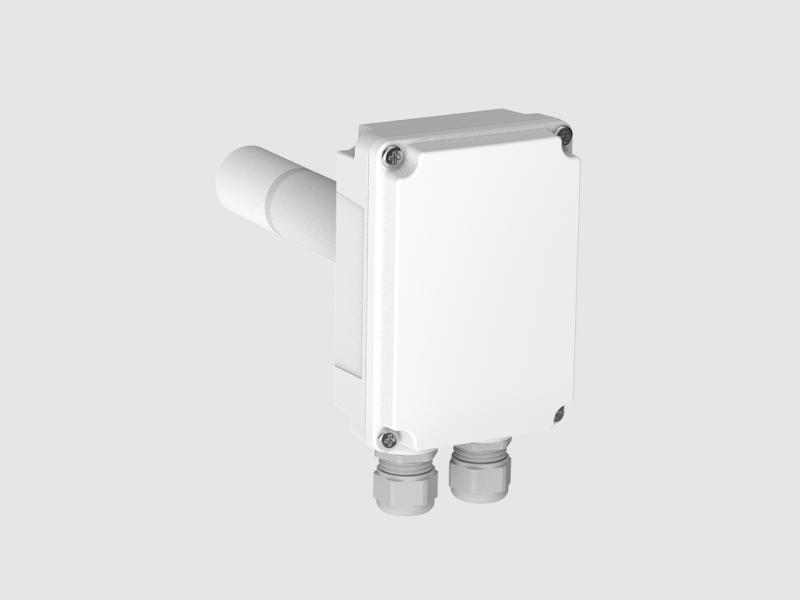
For high-accuracy measurements in HVAC applications
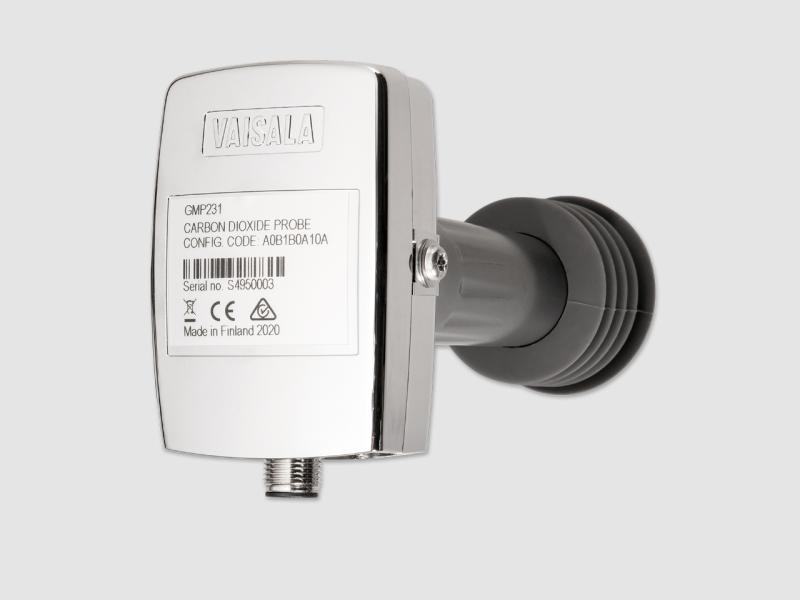
for CO₂ incubators
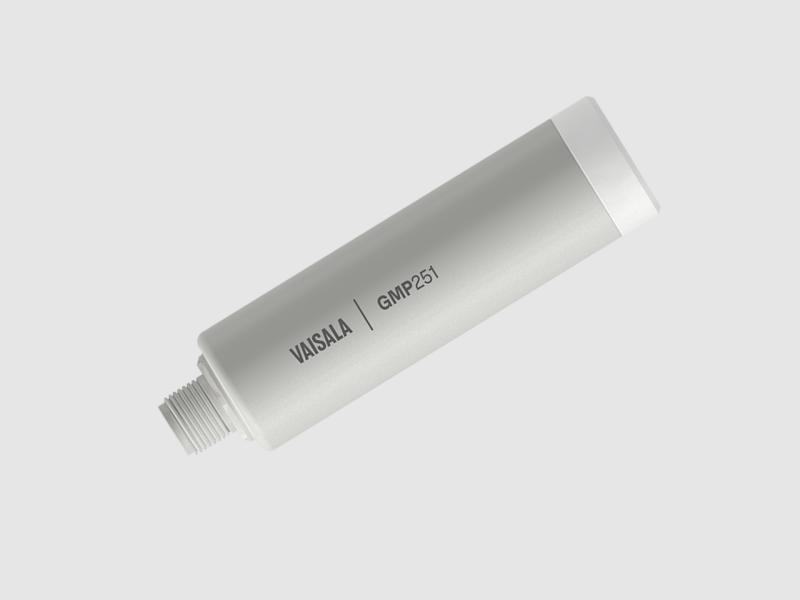
for %-level measurements in life science incubators, cold storage facilities and all demanding applications

What relative humidity, dew point, absolute humidity and mixing ratio are, how temperature and pressure distort the reading, and why dew point is…

How humidity behaves in real conditions, the three most common measurement problems, and two practical scenarios —heated air and compressed air—…

When to measure relative humidity vs. dew point, what high and low humidity demand, how temperature and pressure factor in, and when a warmed probe…

Cooling accounts for up to 40% of a data center's energy demand. This Vaisala guide explains how measurement accuracy cuts costs and risks, with a…
A specialist replies with the solution, the instrument and the service that fit.
Instruments to quote
No instruments yet. An enquiry can be sent anyway: a specialist answers.