

Application note
Application note
Climatic and test chambers subject products and materials to controlled temperature and humidity cycles to validate their behavior. For the general context of this magnitude, see the humidity instrumentation landing.
Unlike a stable HVAC environment, a test chamber puts the sensor through extreme, changing conditions — and often shares the volume with the sealing materials and samples being evaluated themselves, which can interfere with the reading.
Some sealing materials used for chamber walls or cable feed-throughs can release compounds like acetic acid during curing, causing humidity drift. The effect is usually reversible, but it can temporarily affect sensor accuracy while the material keeps releasing those compounds.
The same happens with materials under test: even a relatively small amount of released substances can delay chamber drying and contaminate the sensing surface, giving humidity readings higher than actual until the chamber stabilizes.
In high-humidity conditions, sensor installation matters as much as its rated accuracy: a drop of just 1°C on the probe surface at 40°C and 95% RH can reach the dew point and trigger condensation directly on the sensor, skewing the reading.
The limit also shows up at the hot end: in unpressurized systems, at 120°C the maximum achievable relative humidity is around 51%, limited by water's saturation pressure (roughly 1.987 bar) — a chamber reporting values above that limit under those conditions is signaling a measurement problem, not an actual condition.
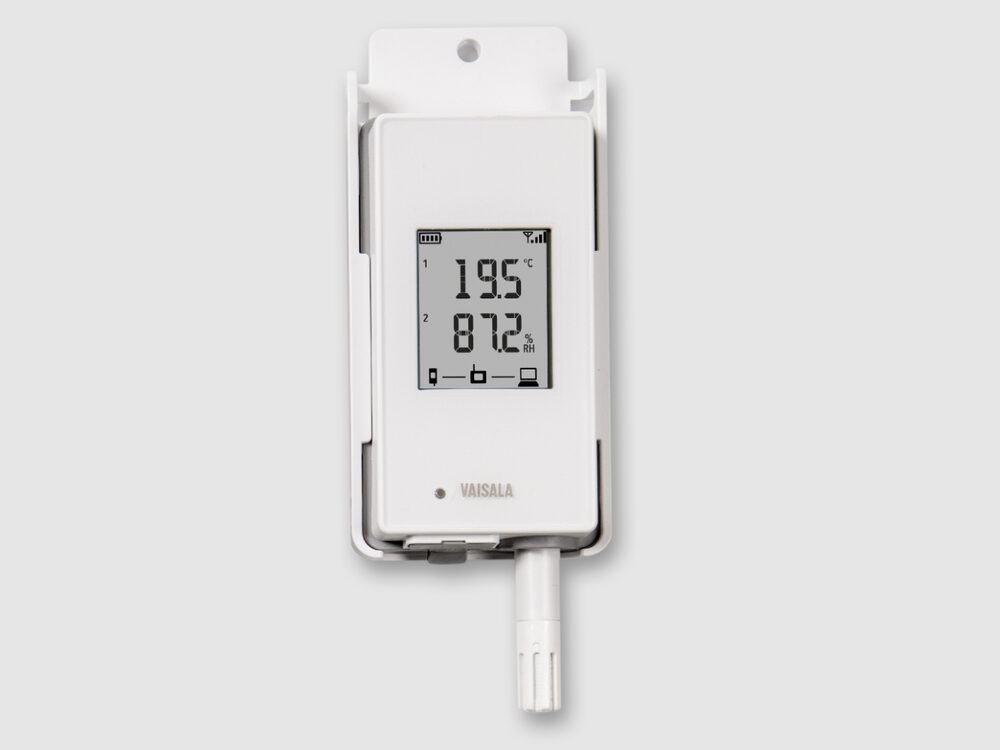
For demanding conditions, Vaisala offers instruments with a purge function that periodically heats the sensor to remove chemical contamination built up from sealing materials or samples under test, preventing that drift from becoming permanent.
When operating conditions approach saturation — for example 95% RH at 95°C — warmed-probe technology (as used in the HMM170 module) heats the probe body to prevent condensation directly at the measurement point. If a chamber becomes contaminated, heating it to 160°C for one hour is usually enough to remove residues and recover a reliable reading; field calibration is checked with a salt bath kit (HMK15) together with a portable meter.
This technical content is based on Vaisala's Q&A application note on humidity measurement in test chambers. AKRIBIS is an authorized Vaisala partner for distribution and technical support in the region — explore the full Vaisala instrumentation line. For the specific probe for your chamber, consult a specialist.
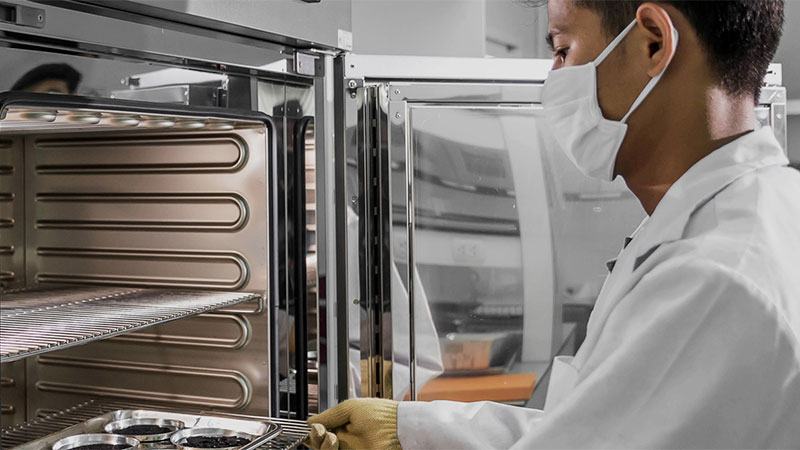
for monitoring temperature, humidity, with optional analog input
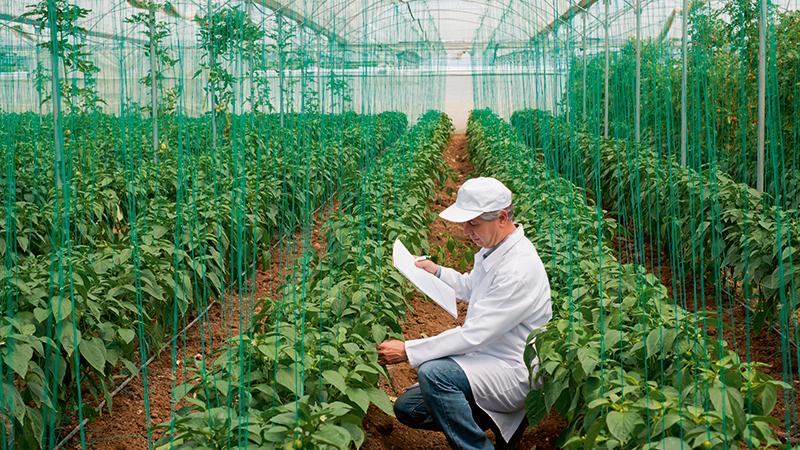
How infrared sensors work, temperature/pressure/humidity compensation, and transmitter placement.
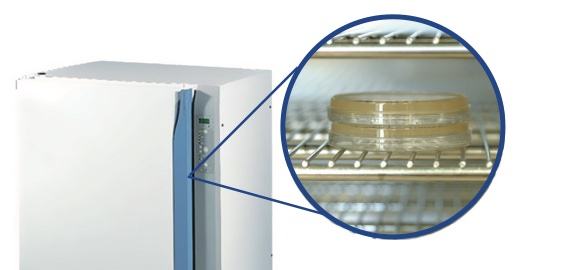
Why CO2 is critical in cell culture, the risk of condensation when measuring in high humidity and temperature, and why sterilization without removing…

Why O2 is lowered and CO2 raised in controlled-atmosphere rooms, and which instruments withstand the cold and high humidity of this environment.

What equilibrium sampling is, why sensor heating can skew field measurements, and what range is needed for deep soil profiles.
A specialist replies with the solution, the instrument and the service that fit.
Instruments to quote
No instruments yet. An enquiry can be sent anyway: a specialist answers.