


Hand-Held Humidity and Temperature Meter HM40
for quick inspections and spot-checking
Technical note
Proper documentation, including SOPs and periodical reports Chambers and rooms are equipped with multiple sensors spread evenly throughout the controlled area Generous multilevel shelving providing orderly storage and proper exposure to the controlled environment Acceptable monitoring equipment (probes, data recorders, etc.) Continuous recording of data and full traceability Corrective action taken when stability factors go outside the specifications Additionally, stability testing requires an alarm function that can detect and announce when an excursion from conditions defined in the study occurs. Pharmaceutical companies have adopted various methods for capturing and announcing abnormal conditions.
Alarms if monitored values go outside a predefined value Alarms on excursion conditions being breached (usually a set temperature or humidity for a particular time) SMS or e-mail alerts triggered by alarms or events The FDA, CDER, CBER and the ICH collaborated to create "Guidance for Industry: Q1A(R2) Stability Testing of New Drug Substances and Products," first published in 1994 and revised in 2001, and 2003. This guidance defines what stability data package for a new drug substance or drug product is sufficient for a registration application within the three regions of the European Union (EU), Japan, and the United States. The guidance was adopted by Health Canada in 2003.
Another source of guidance on stability testing is the World Health Organization, which has published
"Stability testing of active pharmaceutical ingredients and finished pharmaceutical products Annex 2" as part of their
Technical Report Series.
In combination, both of these documents offer the current guiding principles for stability testing protocols. If there are key takeaways from ICH and WHO guidance on testing humidity in stability chambers, it's that the sensor must suit the application; be positioned appropriately, and calibrated routinely over the range of humidity that will be studied. In addition to that, EU regulations require the following;
"The equipment used for the ongoing stability programme should be qualified and maintained following the general rules of EU GMP Volume 4, Chapter 3 (Premise and Equipment) and Annex 15 (Qualification and Validation)".
Read more about Humidity Sensors in Stability Testing by clicking the link below.
Stability Chambers & Redundant Monitoring Sensors
Like other sensors, humidity sensors may drift over time. As drift occurs, control loops continue to respond to sensor inputs, so it's possible that everything may appear to be in control and within specification. Adding one or more redundant sensors reduces the risk of undetected sensor drift. It's best to detect out of specification conditions before stability studies are compromised. The solution is often to install redundant sensors to offset risks to product safety and efficacy.
Independent monitoring sensors need to be highly accurate, stable, and (ideally) equipped to send alerts outside certain thresholds. Most importantly, redundant sensors must be suitable for the intended conditions (e.g. 40°C / 75% humidity) and calibrated to ICH guidelines with a multi-point calibration.
Although sensor drift may occur too slowly to be detected, it can occur faster than most calibration cycles. Even small levels of contamination can cause significant drift. Calibrating once per year, or even every six months depending on how demanding your stability tests are, is expected.
How often do we need to ReQualify Stability Chambers?
Paul Daniel often receives questions about alarm limits and validation-mapping frequency for stability chambers.
Paul writes:
In regards to setting alarm limits, it may not be as simple as it seems. The ICH guidelines are challenging at ±5%RH to the point that I have actually begun to think of the environmental uniformity of stability chambers as an uncertainty. In that light, one might use statistical techniques (like guard-banding) to set process limits like alerts.
For re-validation intervals, I think it's critical to consider that even when operated under a good change control program, things wear out. In the case of a stability chamber – motors wear, door seals warp, valves slowly clog, desiccant ages, and insulation hardens.
It falls to a process experts to determine how often to qualify their stability chambers. It's a question of risk tolerance, and it's predicated on the quality guidelines of individual companies, their history with auditors, and most importantly; the sensitivity of their processes.
Personally, I think auditors are interested in knowing revalidation intervals for stability chambers. But, I also think that if you have data that indicates the systems you use for stability testing are very stable, auditors would accept a longer frequency of remapping.

for quick inspections and spot-checking

For high precision measurements in demanding HVAC applications
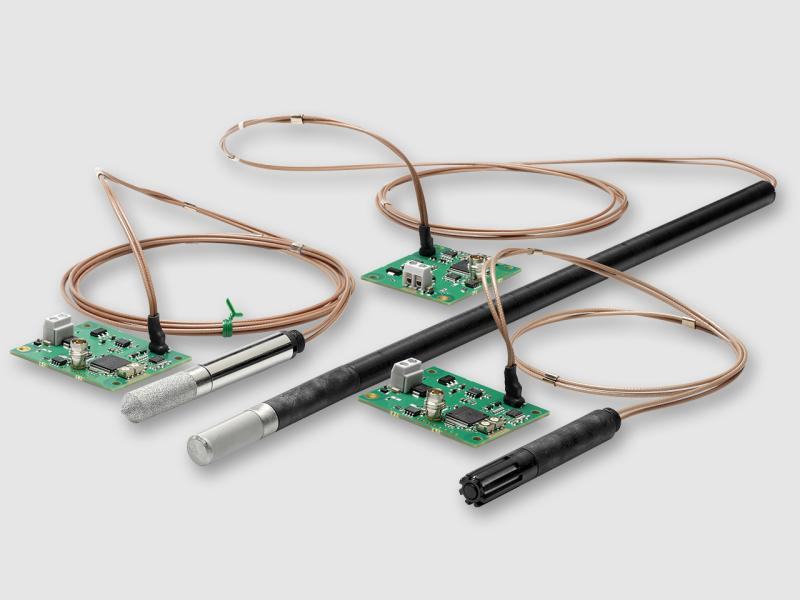
for environmental chambers
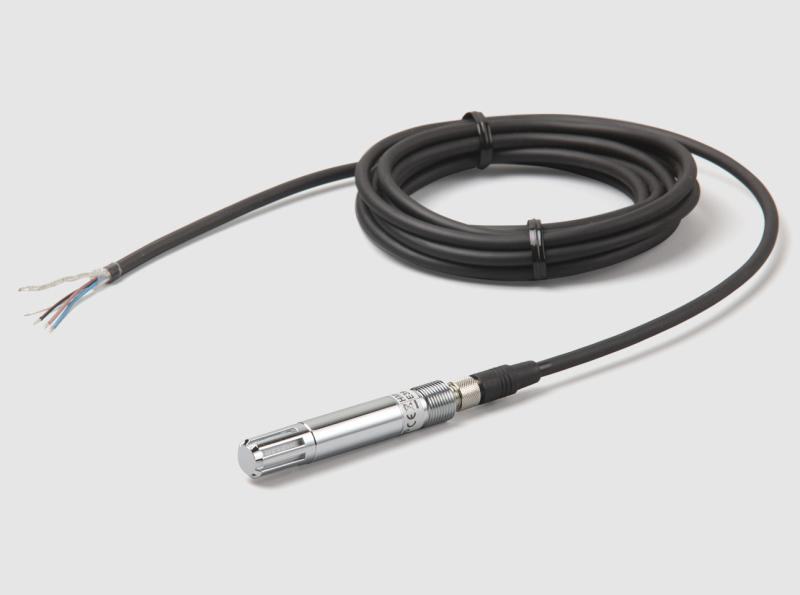
with ±1.5%RH accuracy for demanding volume applications
with ±1.5%RH accuracy for demanding volume applications
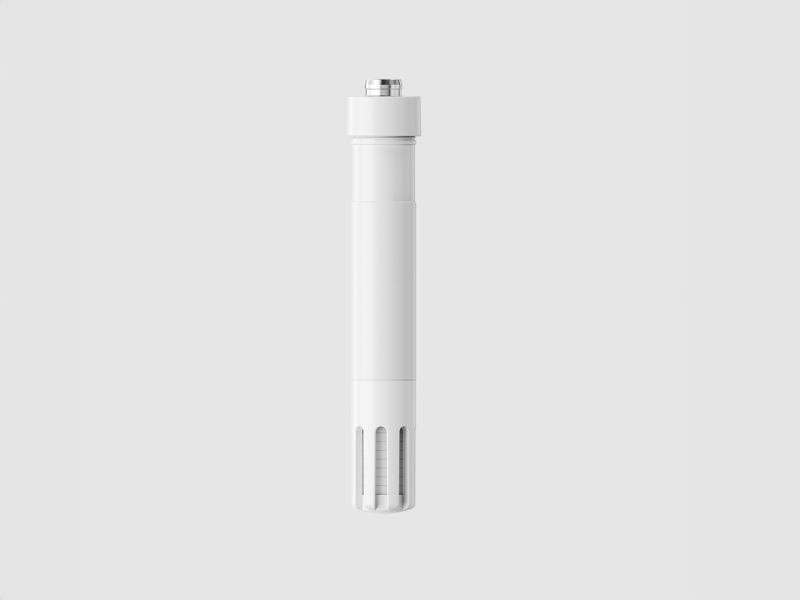
The Vaisala HUMICAP® Humidity and Temperature Probe HMP113 is a highly accurate and cost-effective humidity probe with a plastic enclosure. It has…

What relative humidity, dew point, absolute humidity and mixing ratio are, how temperature and pressure distort the reading, and why dew point is…

How humidity behaves in real conditions, the three most common measurement problems, and two practical scenarios —heated air and compressed air—…

When to measure relative humidity vs. dew point, what high and low humidity demand, how temperature and pressure factor in, and when a warmed probe…

Cooling accounts for up to 40% of a data center's energy demand. This Vaisala guide explains how measurement accuracy cuts costs and risks, with a…
A specialist replies with the solution, the instrument and the service that fit.
Instruments to quote
No instruments yet. An enquiry can be sent anyway: a specialist answers.