


Hand-Held Humidity and Temperature Meter HM40
for quick inspections and spot-checking
Technical note
There are many ways to approach the calibration and adjustment of relative humidity instruments. In a perfect world all instruments would be checked and certified in accredited laboratories to the highest standards. In the real world we must balance time, cost, technical requirements, expertise, and the unique needs of each individual application.
Users often ask manufacturers for a recommended calibration interval. This is a reasonable starting point when thinking about how often to calibrate your instruments, but in practice the performance of an instrument may degrade at different rates depending on the conditions it’s being used in, so it’s important to establish an appropriate calibration interval.
As far as performing the calibration itself, there are several options open to you: you can set up your own calibration lab, send your instruments to a third party for lab calibration, or perform a field check or one-point in-situ calibration yourself.
One-point in-situ calibration uses a working standard to calibrate a fixed field instrument without having to take it out of service – for example, when a technician uses a hand-held device to check a wall-mounted transmitter. The main advantage of this method is that it is both fast and easy. There is no downtime for the field instrument and no additional labor required for dismounting and reinstallation. However, the drawback of this method is the lack of a second calibration point to indicate the correct dynamic response of the field instrument. If the measured conditions are stable over a short period, it may be adequate to gently breathe on the sensor and observe the instrument’s response and recovery; if the measured conditions are highly variable, we recommend a multi-point calibration.
The Vaisala HUMICAP Handheld Humidity and Temperature Meter HM70 is designed for demanding humidity measurement in spot-checking applications. It is also ideal for field checking and calibration of Vaisala's fixed humidity instruments. The following transmitters can be calibrated using the HM70: HMDW60/70, HMW61/71, HMD/W20/30, HMP130, HMP230/240 series, HMT320/330 series, HMM210 series, and the DMW19 transmitter.
When calibrating in the field, be sure to check and adjust a fixed transmitter’s reading against a calibrated reference probe connected to the HM70. One or two-point calibrations can be performed on industrial transmitters and modules (HMP230/240 series, HMT320/330 series, and HMM210 modules) using a Vaisala MI70 indicator and Vaisala’s HMK15 humidity calibrator.
In the video below we go through how to perform one-point in-situ calibration and adjustment for the Vaisala HMT330 using a Vaisala HM70.
for quick inspections and spot-checking

For high precision measurements in demanding HVAC applications
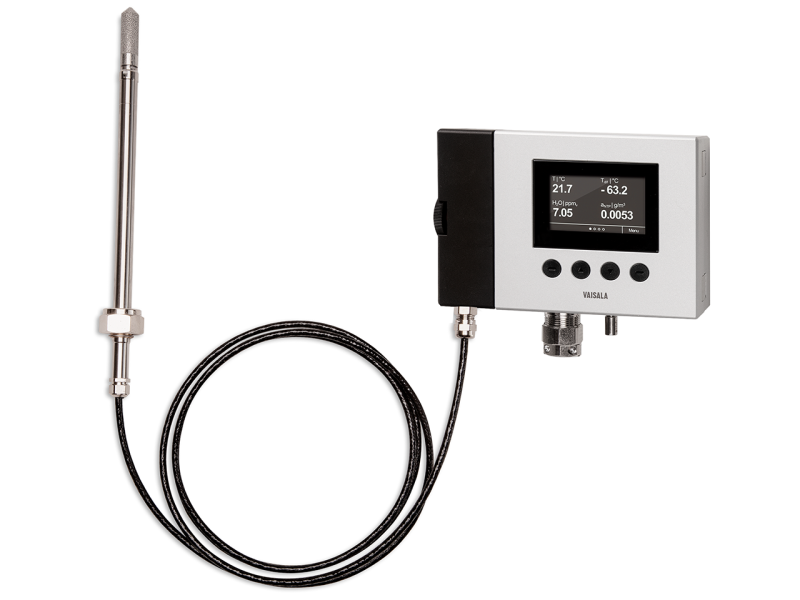
For use up to zone 0 and 20
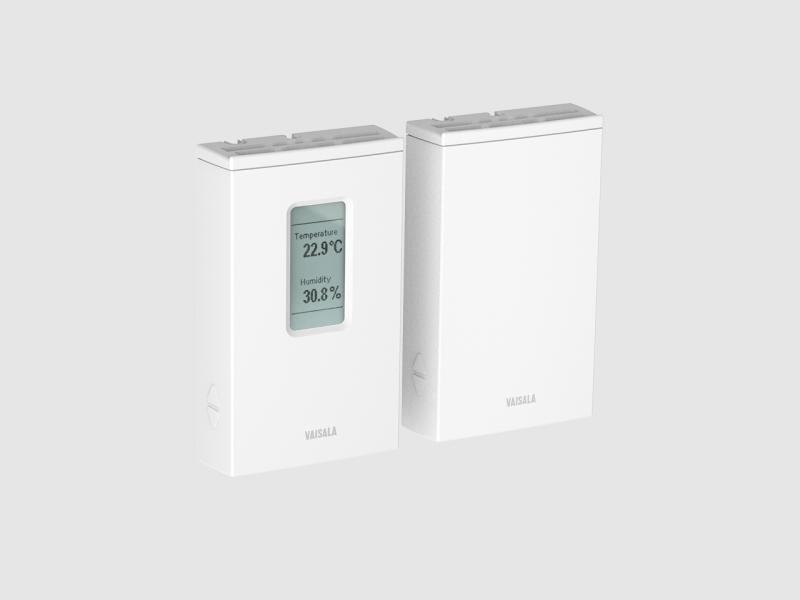
±1.7%RH wall transmitters with a certificate for demanding HVAC
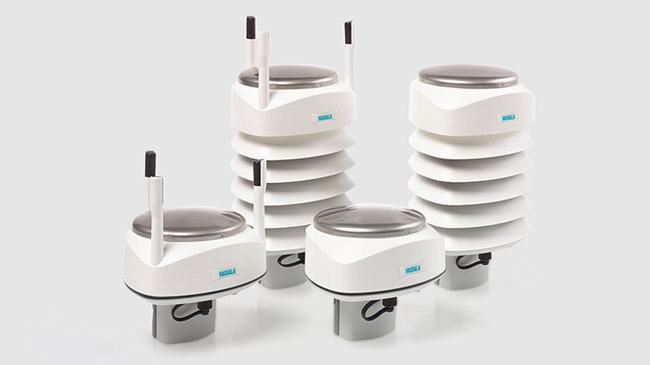
Vaisala Weather Transmitter WXT530 series is a unique collection of cost-effective sensors that accurately and reliably measure weather conditions…
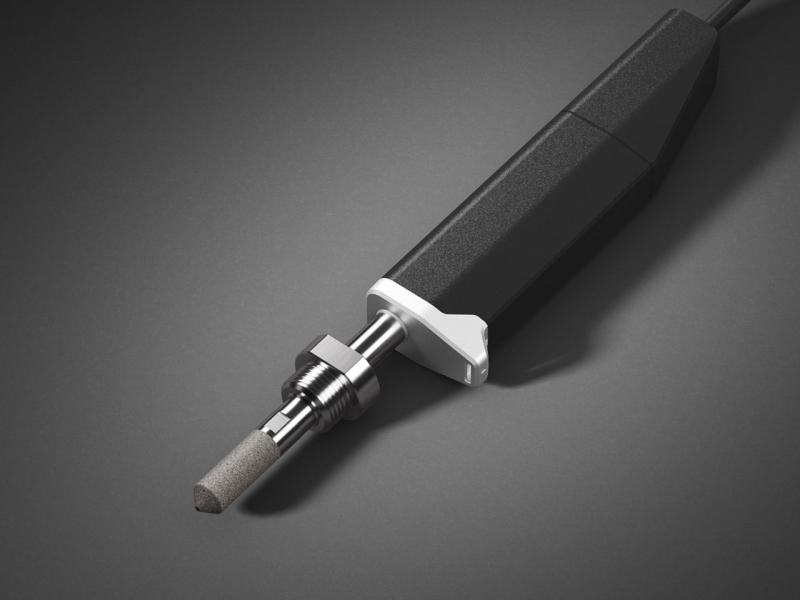
For spot-checking and calibrating dew point measurements

What relative humidity, dew point, absolute humidity and mixing ratio are, how temperature and pressure distort the reading, and why dew point is…

How humidity behaves in real conditions, the three most common measurement problems, and two practical scenarios —heated air and compressed air—…

When to measure relative humidity vs. dew point, what high and low humidity demand, how temperature and pressure factor in, and when a warmed probe…

Cooling accounts for up to 40% of a data center's energy demand. This Vaisala guide explains how measurement accuracy cuts costs and risks, with a…
A specialist replies with the solution, the instrument and the service that fit.
Instruments to quote
No instruments yet. An enquiry can be sent anyway: a specialist answers.