

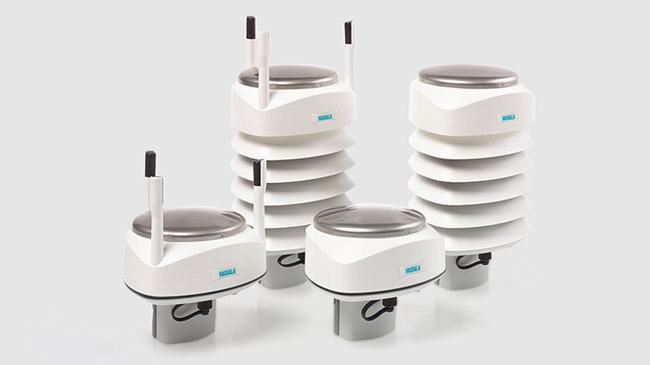
Weather Transmitter WXT530 Series
Vaisala Weather Transmitter WXT530 series is a unique collection of cost-effective sensors that accurately and reliably measure weather conditions…
Technical note
Controlled Environment Agriculture (CEA), including vertical farms, container farms, aeroponics, and aquaculture, is attracting entrepreneurs who recognize the demand for fresh, local agricultural products, and the ability to provide the social benefits that come from local production.
The expansion of the CEA market has been closely tied to the technological advancements made in the industry. Improvements in lighting and facility design have allowed growers and equipment suppliers to focus more closely on automations and control strategies. Many advancements have been made to collect information from the growing process in order to produce more efficiently and to bring more flexibility to these operations. As a result, data-driven development has been shaping the marketplace, helping producers deliver the quality and quantities that make them profitable. All of this adds up to an increase in the supply chain for local distributors and supermarkets to satisfy the demands of local buyers who want to support local producers. This comes at an opportune time when the resiliency of these critical resources is in the spotlight.
Important building blocks of modern crop production technology are the sensor measurements which deliver the information needed to make smart control decisions. Data from these sensors are used to balance the conditions between the growing space and the surrounding environment, which help optimize resources, enable automation, and reduce the labor demands of an operation. All of this adds up to a more accurate way of controlling costs, which places a lot of responsibility on those sensor measurements.
Among the resources used in CEA production is CO2 gas enrichment, which stimulates photosynthesis, and must be supplied to an enclosed growing space. The expense and environmental impact of the gas is known, and so accurate measurements to control the supply is critical. Challenges for CO2 sensors are the accuracy, stability, and measurement range of these sensors, making sensor selection very important. A CO sensor for CEA cannot use software shortcuts to preserve accuracy, and they must compensate for high humidities and temperature fluctuations. This is not possible for many low-tech options in the market.
Vaisala has been focusing on CO2 measurements for industrial applications with its CARBOCAP technology since the 1990s, and those efforts have resulted in the most stable and effective sensor technology for agricultural environments. Delivering high accuracy with a low total cost of ownership, instruments like our GMW90 Series and GMP252 probes are the ideal choice for CEA use, and handheld units like our GM70 allow for precise, targeted measurements at each rack, plant and leaf.
When it comes to the humidity and temperature of the growing space, both variables have distinct impacts and optimal ranges for each type of plant. The long term stability and accuracy of humidity and temperature measurements from Vaisala probes such as the HMP110 will help prevent unwanted condensation and resist disease, with reliability and low maintenance.
While humidity relationships have been widely understood, the lesser known parameter of Vapor Pressure Deficit (VPD) has a much more direct effect on a plant’s growth potential. The Vapor Pressure Deficit (VPD) in a growing environment is the relationship between how much moisture is in the air and how much moisture the air can hold when it is fully saturated. This difference is then related to the air temperature and the plant’s leaf temperature. Analyzing these variables for both the larger growing space, and the air at the plants boundary layer, or leaf canopy, determines how aggressively the ambient air can pull water and air through the plant.
The VPD will directly affect the transpiration rates of the plants, and how they move water and nutrients through themselves. This transpiration rate will then affect water usage rates, fertilizer volumes, and the HVAC energy needed to control the relative humidity and temperature in the ambient air. All of these effects are directly tied to operating costs, as well as the potential quantities and quality of the products themselves.
To calculate the VPD, we must compare the difference between the plants’ Saturated Vapor Pressure (which we can know, if we know the temperature of the leaf) and the Vapor Pressure of the air (VPsat – VPair).
To get VPsat, we must know the temperature of the saturated environment, in this case, the leaf of the plant. We can measure this with an infrared temperature gun.
The formula for VPsat (in Kilopascals kPa) is:

Where T is leaf Temperature in Celsius
To get VPair, we must know the temperature and humidity of the air, known together as relative humidity. We can measure this with humidity and temperature sensors in the growing room.
The formula for VPair (in Kilopascals kPa) is:

Where T is air Temperature in Celsius and RH is Relative Humidity
To get VPD, we need to subtract the actual vapor pressure of the air from the saturated vapor pressure. VPD = (VPsat – VPair).
Ideal VPD for both the plants as well as HVAC efficiency is a much narrower range than you may think, with the difference between favorable and unfavorable conditions coming down to only a few %RH and fractions of a degree in temperature. Opting for more accurate and stable sensors to deliver these values will allow you to control quality and operating costs more effectively over the long term, and Vaisala sensors have the performance to meet those needs.
Real use cases are also an important building block for developing industries so that technology and techniques are developed in a practical manner, and successful methods can be shared. This is where customers like Fifth Season Fresh and Damatex come into the forefront, as they demonstrate the value of reliable and accurate sensor data to optimize their automation technology. They are helping to lead the way towards making CEA and vertical farming more accessible and profitable, bringing with them the societal benefits of clean, fresh, local food sources. We at Vaisala are happy to be supporting this transformative application.
Do you want to know more about efficient indoor farming? Join us for our webinar on indoor farming technology: consistent growth through reliable measurement, where we will further discuss sensor considerations for CEA.
Vaisala Weather Transmitter WXT530 series is a unique collection of cost-effective sensors that accurately and reliably measure weather conditions…

for cleanrooms and industrial settings

for quick inspections and spot-checking

For high precision measurements in demanding HVAC applications
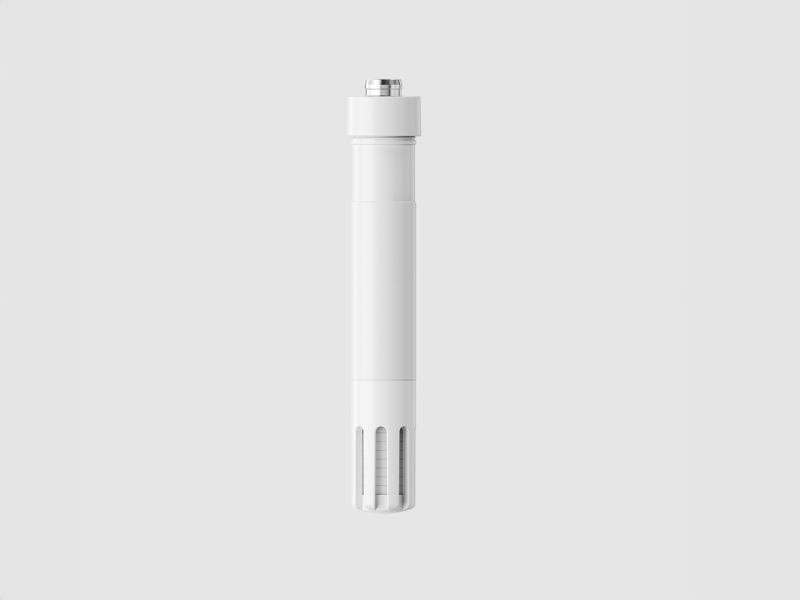
The Vaisala HUMICAP® Humidity and Temperature Probe HMP113 is a highly accurate and cost-effective humidity probe with a plastic enclosure. It has…
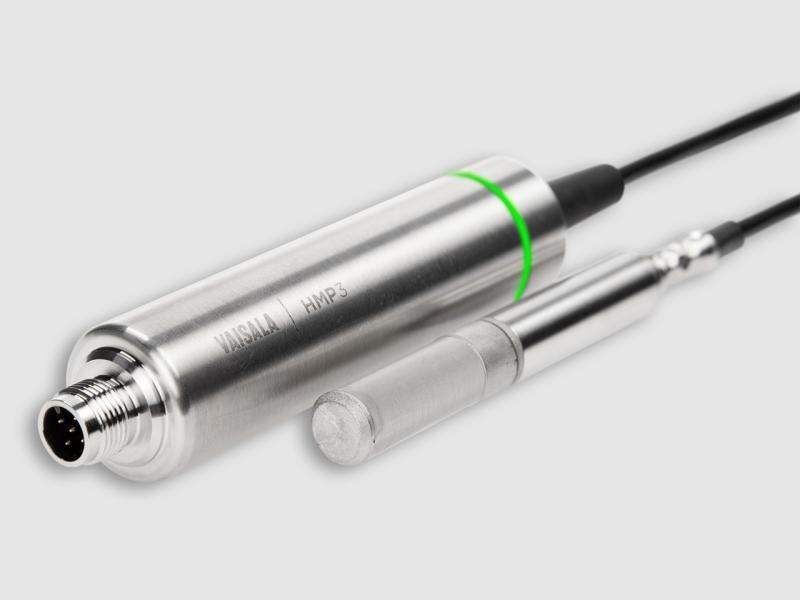
for general purpose humidity and temperature applications with exchangeable sensor

What relative humidity, dew point, absolute humidity and mixing ratio are, how temperature and pressure distort the reading, and why dew point is…

How humidity behaves in real conditions, the three most common measurement problems, and two practical scenarios —heated air and compressed air—…

When to measure relative humidity vs. dew point, what high and low humidity demand, how temperature and pressure factor in, and when a warmed probe…

Cooling accounts for up to 40% of a data center's energy demand. This Vaisala guide explains how measurement accuracy cuts costs and risks, with a…
A specialist replies with the solution, the instrument and the service that fit.
Instruments to quote
No instruments yet. An enquiry can be sent anyway: a specialist answers.